A library in Picton organized the DiscARTed Art show
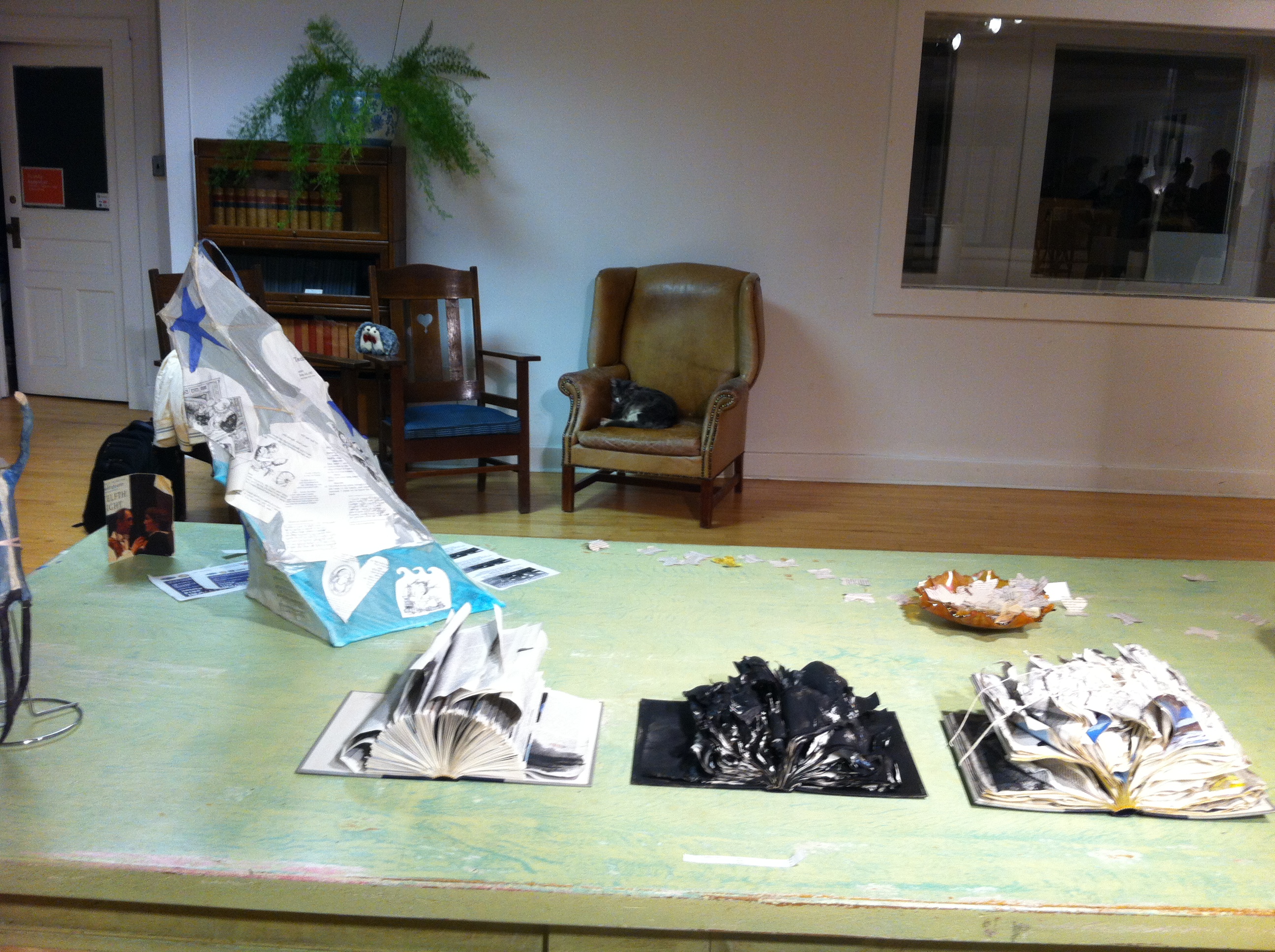
It was a cozy evening event organized by a local library in a small town. Anyone who wanted to take part had been invited to pick up discarded books from one of the six libraries in Prince Edward County and make something new out of them. And voilà! Here is a sculptural dress made of glued book pages. Here is a table lamp with a book for a base and a two-sided picture shade that gives off a soft light. Next to them sits a beautiful little sailboat carved from the top half of a book, while the bottom half is left intact. Yes, the remains of a book. Nobody reads this book anymore, but it can still conjure up a romantic image. One last time.
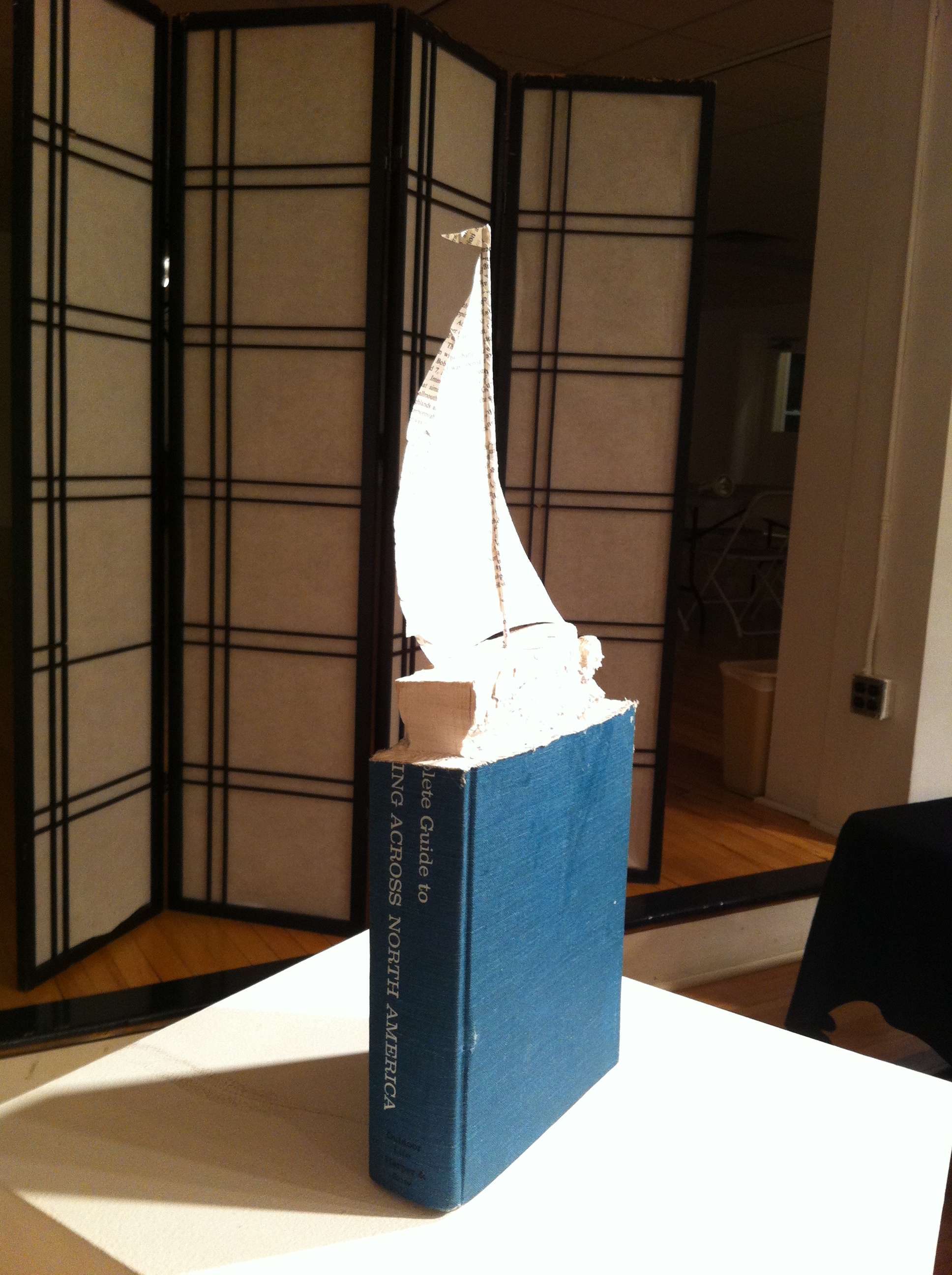

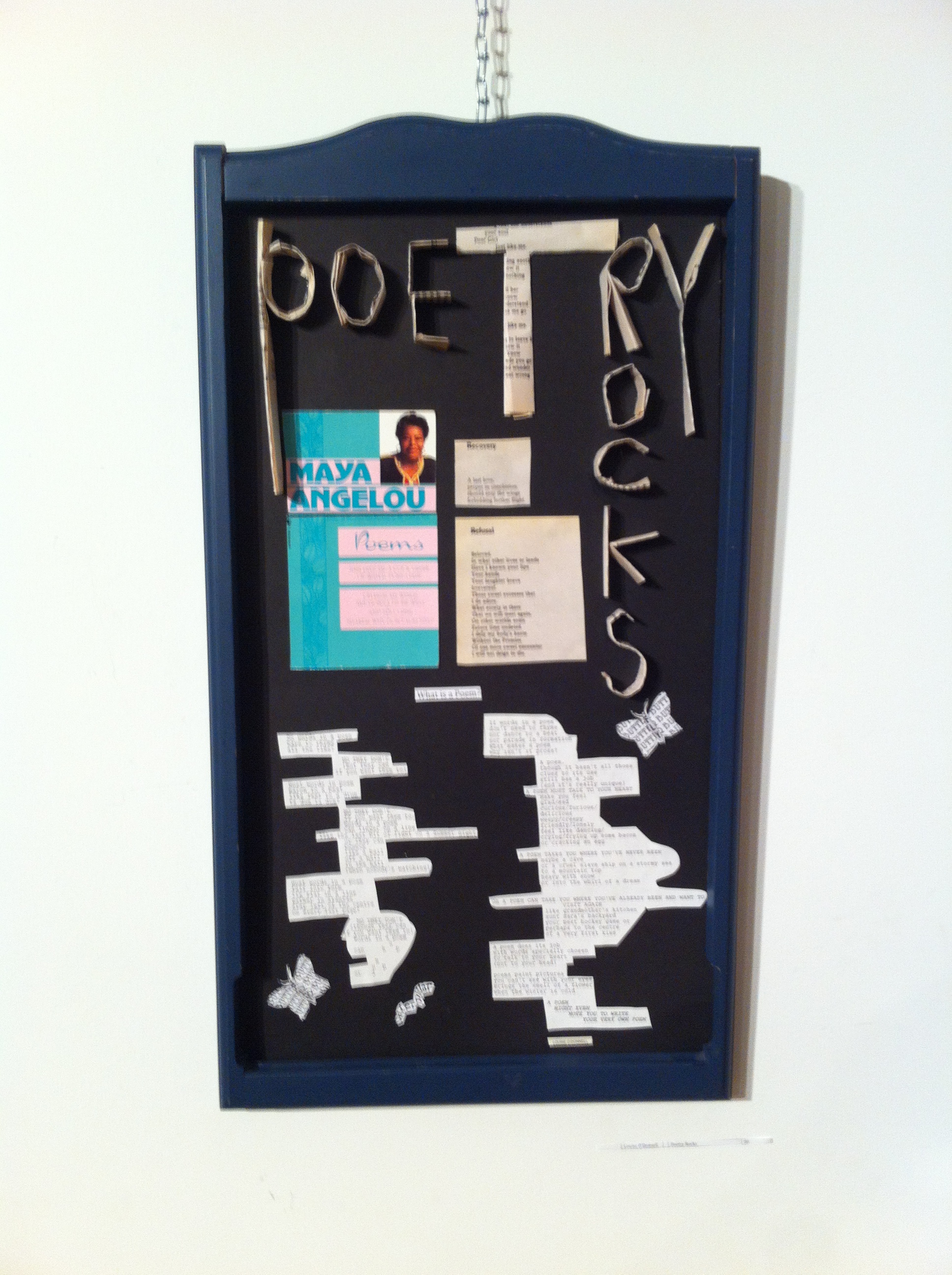
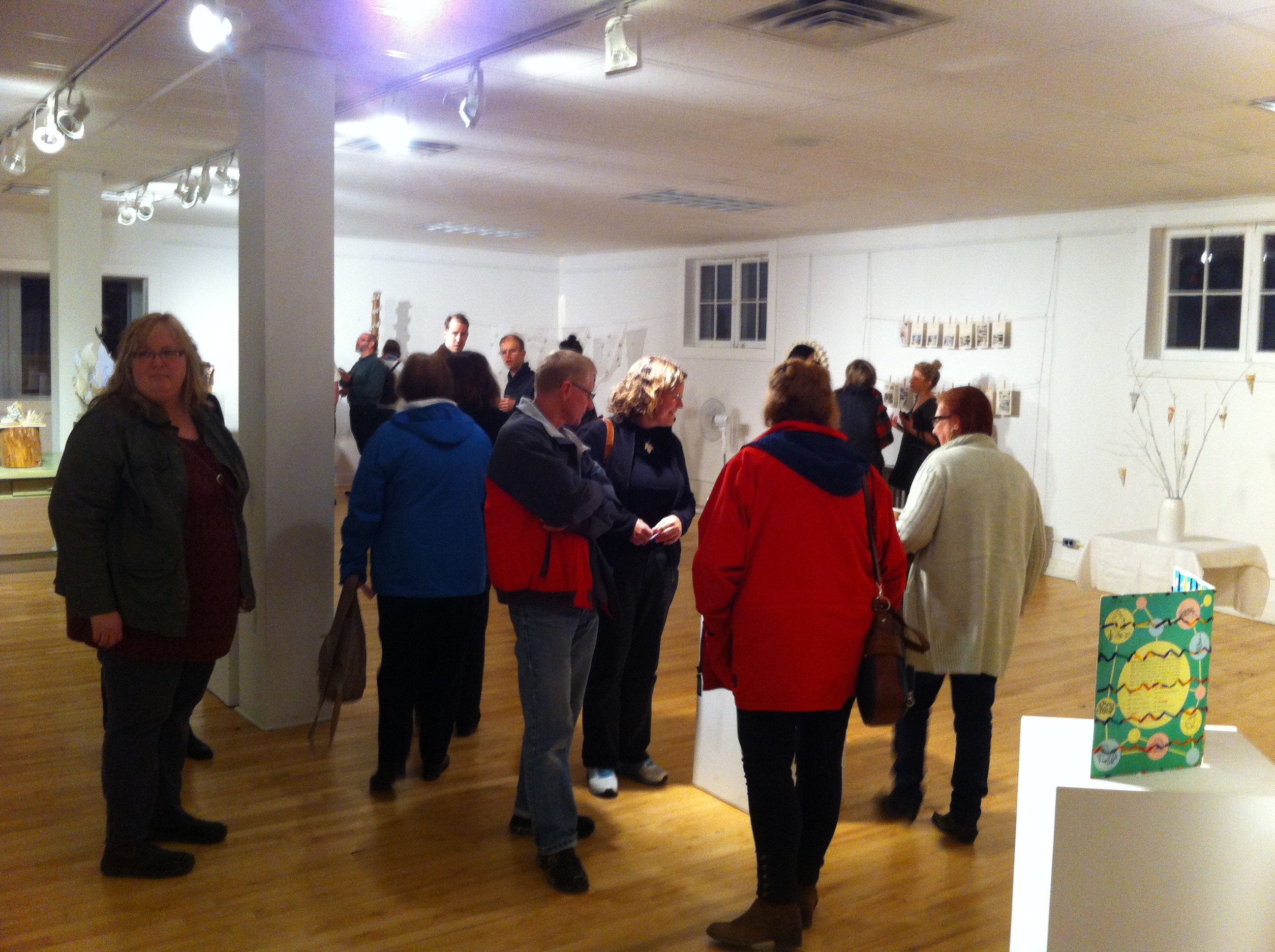
At the end of October, the Prince Edward County Library and Archives, together with Books & Company, hosted the “2014 DiscARTed Art Show: Creations from Discarded Books” in Picton, Ontario. It was the third annual show, so the tradition was already well established. The event was meant to raise funds for the library and for an upcoming local authors’ festival, and visitors could buy whatever caught their eye. But profit wasn’t the main result. Fun was.
There is something unsettling about using a book for anything other than reading. To make something out of books, you first have to destroy a book. For me, having grown up in the Soviet Union, it is still a sensitive matter, even though I have written a great deal about the coming death of newspapers. It was only about eighty years ago that the Bolsheviks’ sweeping campaign “LikBez” (“liquidation of illiteracy”) raised the literacy rate in Russia from 30 to 90 percent, and people still hold reading, and books as physical objects, in high regard. “Don’t damage the book!” we were taught in school.
And now the book is no longer sacred; it is just an obsolete carrier of information, and far from the best one.
Of course, I am not alone in seeing the book as something special in its physical form. I asked Christine Renaud, the librarian and co-organizer of the DiscARTed Art Show, how she felt about “reprocessing” the books (which really means destroying them), and she expressed exactly the feeling I had. She is naturally partial to books, being a librarian, but I think anyone who has lived through the end of the Gutenberg era may feel the same sense of loss. But what can we do? Otherwise, Christine says, the discarded books would simply be recycled, which also means destruction, only an inglorious one. So the idea was to give at least some of the books a new life… through a beautiful death, I would add.
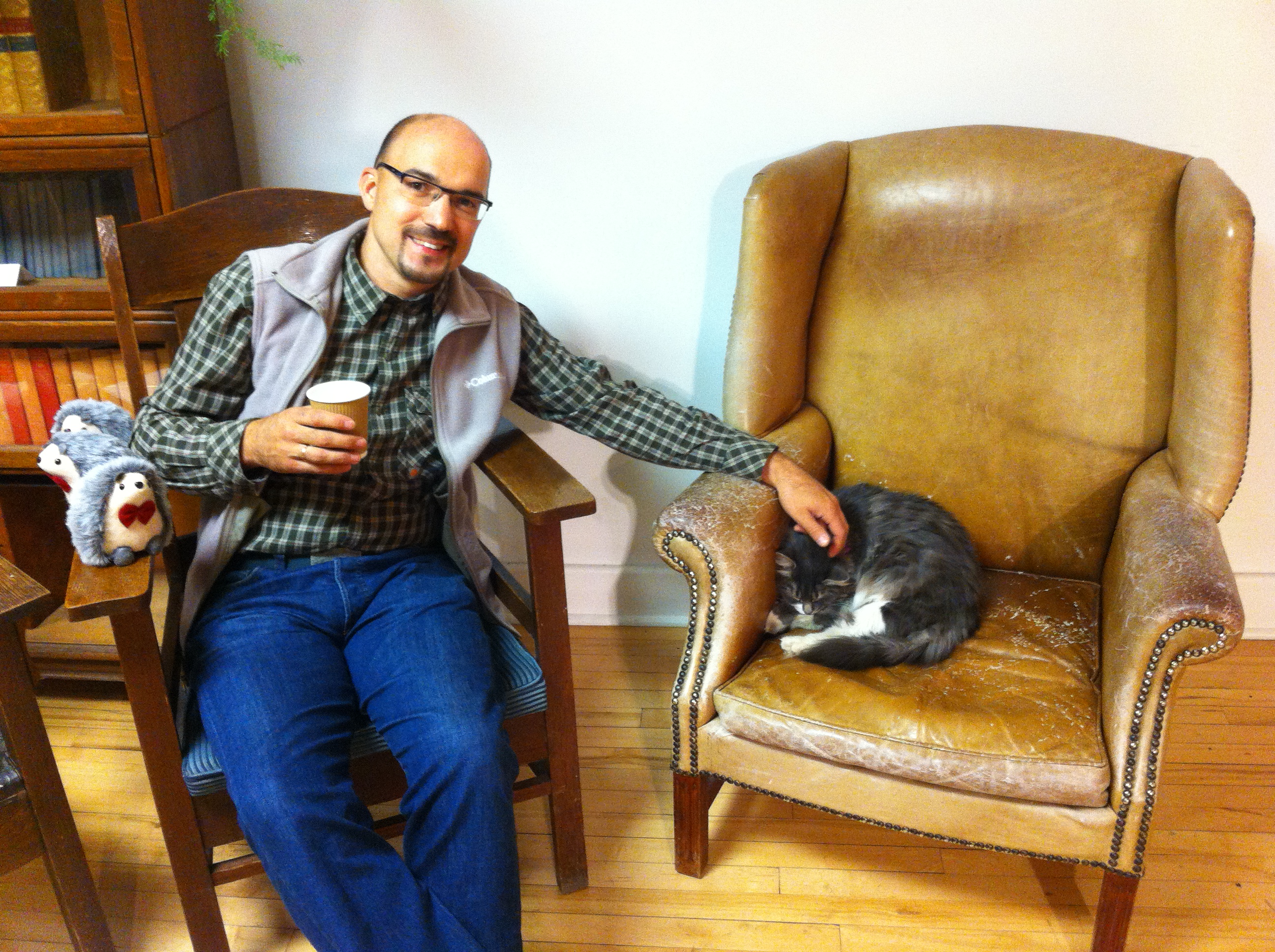
Of course, someone from the print era, a Typographic Man, will try to give an old book a new reading in this situation. I know just such a person. Andrew McLuhan, who lives in Picton, took part in the DiscARTed Art Show, and he shares my feelings about destroying books. That is why, in his project, he set out to preserve the spirit of the books even as he cut them up. Andrew would study a book, then take a sharp knife and cut out lines and words by hand, producing poems whose lines look randomly strung together but have been given new meaning by his deliberate choices. He then laid each poem, drawn from the old text, over a picture from another discarded book, so that the image and the verse play off each other. The result is a completely new reading of old pages. It is still about pages and still about reading, yet it is also a new work of art. I now own a couple.

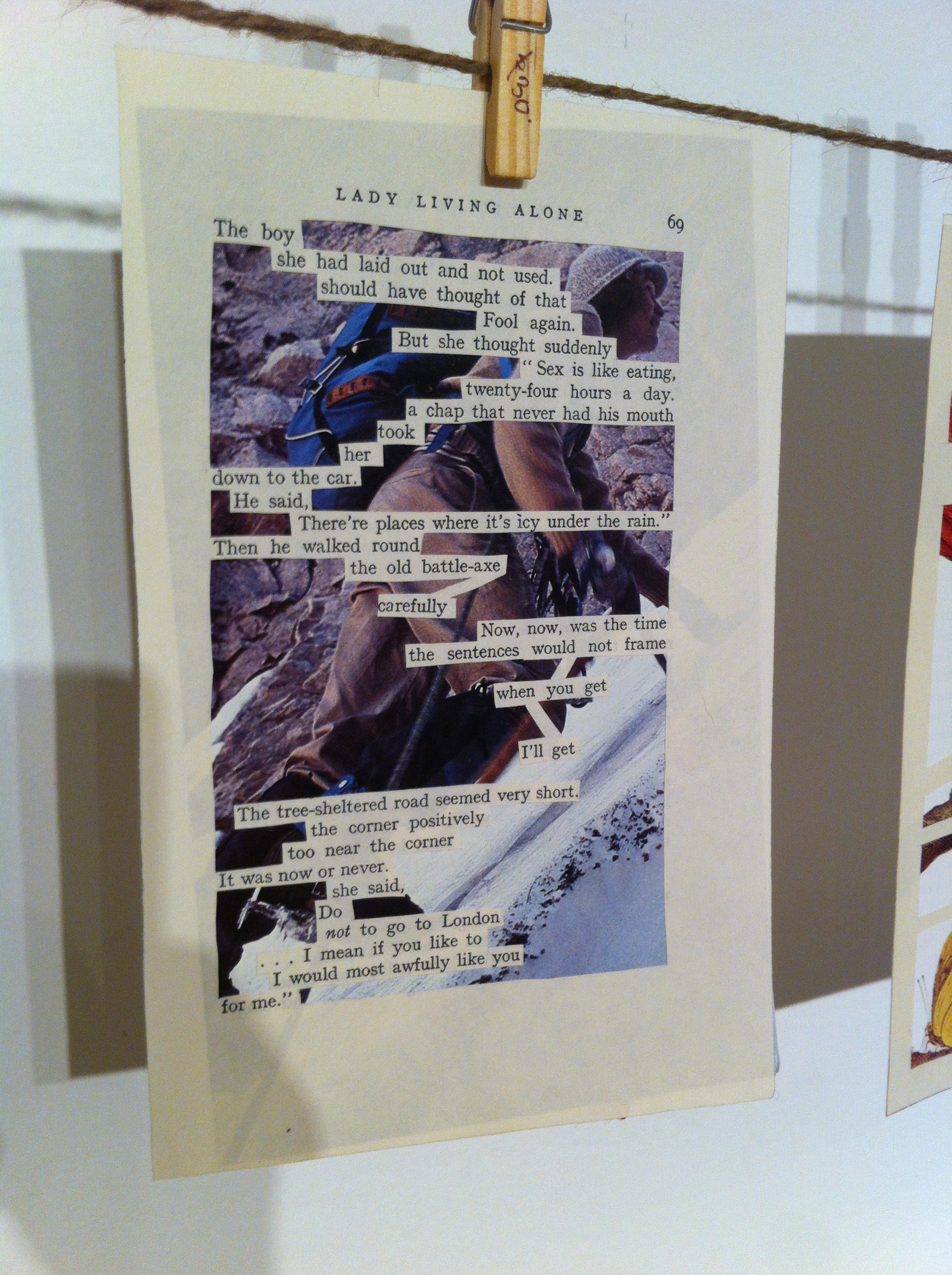

Explaining his idea, Andrew points to Laws of Media, the book by his grandfather, Marshall McLuhan, and his father, Eric McLuhan: “It works into the Laws of Media,” he says. “Media become obsolesced and retrieved as an art form.” Taking my cue from him, I would bring up another of McLuhan’s ideas. In the art pieces Andrew made for a library fundraiser, we can see, quite literally, how an older medium becomes the content of a newer one.

ust as humankind plays with all its media, so does Andrew McLuhan, and not only with discARTed books. He spends half of his day working with his father to maintain and develop Marshall McLuhan’s legacy. The rest of the time, he runs a small furniture business, reupholstering old furniture. Business is going pretty well: in the age of IKEA, people increasingly value old pieces with a history. But the people who bring him their furniture don’t know a secret of his that I discovered by accident while we were discussing the fate of the printed word. On the underside of the upholstery, Andrew sometimes writes a few verses of his own. Probably nobody has read them yet, but I don’t believe a poet or a writer can create anything without a reader in mind, even an imaginary one. “Sure,” says Andrew, “somebody will read it. If only the next upholsterer.”
So, to use or to read? That is the question.
See also books by Andrey Mir:
- Digital Future in the Rearview Mirror: Jaspers’ Axial Age and Logan’s Alphabet Effect (2024)
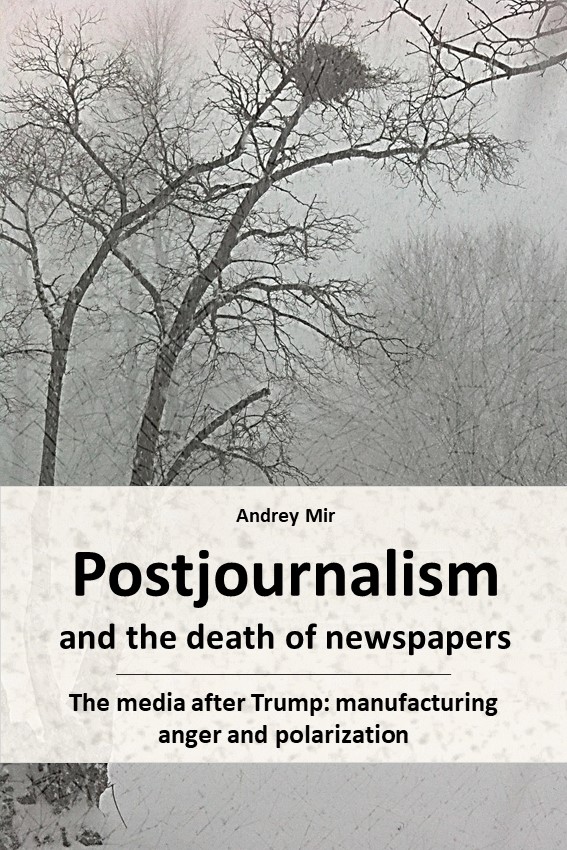
- Postjournalism and the death of newspapers. The media after Trump: manufacturing anger and polarization (2020)
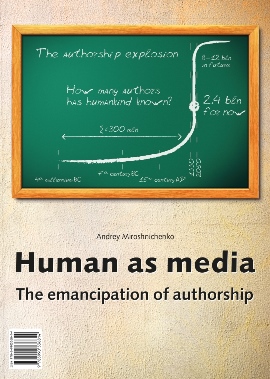
- Human as media. The emancipation of authorship (2014)

Categories: Decline of newspapers, Future of journalism, Media ecology


A sculptural dress made of glued book pages is some opening image — I clicked expecting a eulogy and got a party. The cozy evening event the local library threw, inviting people to take discarded books from the six Prince Edward County libraries and make something new out of them, sounds like exactly the kind of send-off the end of the book era deserves. “Trees die twice” is a bleak phrase, but what you describe feels gentler: the pages stop being read, yet they don’t stop being loved. My only question is whether dressing decline up in book-page gowns makes it easier to ignore — small-town craft evenings are lovely, but they don’t replace readers. Beautiful post either way, and that dress deserves a follow-up photo.