The emancipation of authorship (Miroshnichenko, 2013) has led to an exponential growth in the number of information sources. Anyone who goes online is immediately inundated with huge amounts of information, more than a human being could previously absorb in a… Read More ›
Media Ecology
Temporal shock. Media Ecology as Ecology Contrariwise – II
The technological shock has to do with the mess in space and is accompanied by the temporal shock that has to do with the compression of time. In previous eras, each of which contained a number of successive generations, people… Read More ›
Media Ecology as Ecology Contrariwise: Protecting Humans from the Digital Environment – I
The ecological approach to humans’ adaptation to the digital environment is rooted in the ideas of traditional ecology, yet it turns these ideas upside down. The main idea of a traditional environmental movement is to protect the environment from human… Read More ›
Celebrating the re-launch of McLuhan’s Coach House in the 21st Century
For media ecologists, the Coach House has always been a place of force. On October 20, 2015, the McLuhans and Mcluhanists gathered in the Coach House at the University of Toronto to re-establish the “McLuhan Centre for Culture and Technology”… Read More ›
3 filters of Internet hygiene: browser settings, the Viral Editor and the Filter Bubble
Is the Internet really just a supplier of rubbish? One of the video presentations of American media thinker Clay Shirky is entitled It’s Not Information Overload. It’s Filter Failure.[i] The problem is not the volume or quality of information, but… Read More ›
Text? No longer
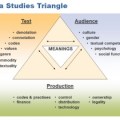
Some thoughts on possible obsolescence in the Media Studies Triangle, Ontario Media Literacy Program “In 1988, Ontario became the first educational jurisdiction in the world to mandate media literacy as part of the English curriculum”, reports the “Media Education: Make… Read More ›