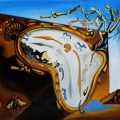
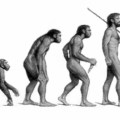
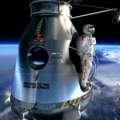
“So we’ve got radio already, but we’re still waiting for happiness,” said Soviet satirist Ilya Ilf[i] of the technical progress of the 1930s. The well-known American comedian Louis C.K. expressed a similar sentiment eighty years later on Conan O’Brien’s late-night… Read More ›
Digital Environment
Media hygiene. Media Ecology as Ecology Contrariwise – III
The emancipation of authorship (Miroshnichenko, 2013) has led to an exponential growth in the number of information sources. Anyone who goes online is immediately inundated with huge amounts of information, more than a human being could previously absorb in a… Read More ›
Temporal shock. Media Ecology as Ecology Contrariwise – II
The technological shock has to do with the mess in space and is accompanied by the temporal shock that has to do with the compression of time. In previous eras, each of which contained a number of successive generations, people… Read More ›
Media Ecology as Ecology Contrariwise: Protecting Humans from the Digital Environment – I
The ecological approach to humans’ adaptation to the digital environment is rooted in the ideas of traditional ecology, yet it turns these ideas upside down. The main idea of a traditional environmental movement is to protect the environment from human… Read More ›
3 filters of Internet hygiene: browser settings, the Viral Editor and the Filter Bubble
Is the Internet really just a supplier of rubbish? One of the video presentations of American media thinker Clay Shirky is entitled It’s Not Information Overload. It’s Filter Failure.[i] The problem is not the volume or quality of information, but… Read More ›
Some notes after reading “Human as Media”, by Adam Thomlison
Authors in the field of popular literature bear many of the same marks as the emancipated authors in Andrey Miroshnichenko’s “Human as Media: The Emancipation of Authorship.” Andrey’s book touches on a couple of concepts that I also looked at… Read More ›
Lenin and billions of man-hours of free time. From passivity of TV consumption to activity of social media contribution
Television swallowed up millions of man-hours of free time by drawing people into a shared passive addiction. Prior to the age of TV, never before had such a large number of people done the same thing at the same time…. Read More ›
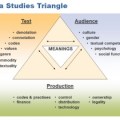
Text? No longer
Some thoughts on possible obsolescence in the Media Studies Triangle, Ontario Media Literacy Program “In 1988, Ontario became the first educational jurisdiction in the world to mandate media literacy as part of the English curriculum”, reports the “Media Education: Make… Read More ›
Content marketing: How companies are turning into media. Case studies
Brands are engaged in a media arms race. Creating relevant and valuable content is no longer an option, but a necessity. Traditional marketing boils down to managing brand information distribution, while content marketing strives to create conditions in which information… Read More ›
Trees die twice: the beautiful end of the book era
A library in Picton organized the DiscARTed Art show It was a cozy evening event organized by a local library in a small town. Anyone who wished to participate had been encouraged to pick up discarded books from one of… Read More ›